Industrial mixing supports many processes across manufacturing plants. An Industrial Agitator creates this movement by blending materials, keeping particles suspended, and supporting steady process conditions. Premix Technologies works with industrial mixing requirements and process equipment needs. Understanding design and material properties helps teams select equipment. These systems must suit fluid behaviour, vessel dimensions, and production targets. A mismatch can cause uneven batches, longer cycles, excess power demand, or avoidable maintenance. Reviewing these factors early gives operators a clearer basis for equipment decisions and helps suppliers recommend a suitable configuration for each specific industrial application.
The Role of an Industrial Agitator in Process Plants
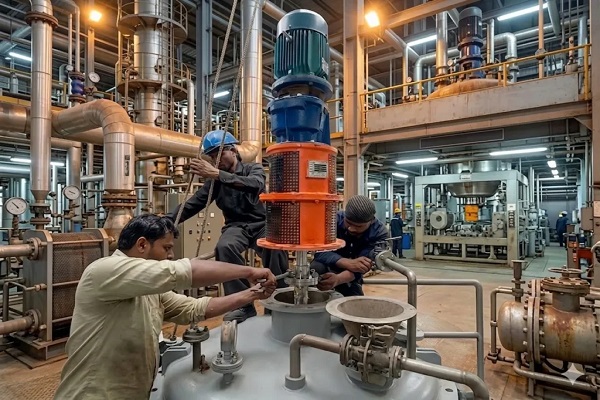
Within a mixing vessel, an Industrial Agitator uses an impeller to create flow within a vessel. The flow pattern of an Industrial Agitator depends on blade shape, rotation speed, tank geometry, and material properties.
Selection should start with the process requirements.
Design Features That Shape Mixing Performance
Its shape determines how fluid moves through the tank. Axial-flow designs move material mainly up or down, while radial-flow designs push it outward. Pitched-blade turbines and propellers serve different applications.
A motor must provide enough torque for an Industrial Agitator without wasting energy. Viscosity, density, temperature, and solids content affect the required power. Shaft length and support must suit tank depth and load.
A well-matched Industrial Agitator reduces dead zones and improves circulation. However, increasing speed does not always improve results. Excessive speed may create a vortex, introduce air, or damage sensitive materials. Good design balances flow, shear, and energy use.
Selecting Equipment for Different Materials
Thin liquids usually need less power than thick fluids. Slurries may need enough movement to prevent solids from settling. Shear-sensitive products require gentle mixing, while some chemical processes need stronger agitation.
Vessel dimensions influence circulation considerably. Baffles reduce swirling and turn rotational movement into useful mixing.
Before purchasing an Industrial Agitator, define mixing time, production volume, operating temperature, and cleaning method. Share these details with the supplier. This helps prevent unsuitable equipment and costly changes.
Industrial Agitator Applications Across Key Sectors
Chemical manufacturers use agitators to blend raw materials, support reactions, and keep mixtures uniform. In paints and coatings, mixing distributes pigments and additives. Pharmaceutical production may need accurate blending under controlled conditions. Wastewater plants use agitation to suspend solids and distribute treatment chemicals.
Food processors use an Industrial Agitator to mix syrups, sauces, beverages, and other liquids.
Therefore, an Industrial Agitator should match the process, not just tank size or motor rating. Material compatibility, sealing, maintenance access, and safety requirements also matter.
Advantages of Correct Mixing Equipment
Consistent mixing improves batch quality and reduces variation. It can support faster dissolution, better heat transfer, and more reliable reactions. When solids remain suspended, operators can maintain a uniform mixture throughout production.
Energy efficiency is another key factor. A correctly sized drive and suitable impeller deliver required movement without excessive power use. Robust construction can simplify inspections and reduce downtime.
A properly selected Industrial Agitator may shorten mixing cycles. Assess results through blend uniformity, suspension quality, and power use.
Process Support from Premix Technologies
Premix Technologies considers equipment requirements that support industrial process operations. Selection reviews the product, vessel, operating conditions, and expected result. This helps identify a configuration suited to the application rather than relying on one standard arrangement.
When assessing an Industrial Agitator, plant teams should discuss impeller type, drive arrangement, wetted materials, sealing, and installation limits. They should clarify whether the equipment will handle corrosive fluids, abrasive solids, or changing batch levels. Clear specifications align the system.
Specialized Dosing and pH Control
A Ph Correction Injection Package supports processes that need controlled adjustment of water or liquid streams. It typically includes dosing equipment, chemical storage, injection points, and suitable controls. The package adds correction chemicals at a planned rate to help maintain the required pH range. Correct sizing depends on flow rate, inlet conditions, chemical concentration, and the target value. Teams should consider safe handling, calibration, maintenance access, and compatible materials. Although it performs a different task from mixing machinery, this package can support stable industrial operations.
Maintenance for Long-Term Reliability
Operators should check seals, bearings, couplings, fasteners, and motor condition on schedule. Unusual noise, vibration, heat, or leakage may signal a developing issue. Investigate these signs promptly.
Cleaning needs vary by industry. Food and pharmaceutical facilities may require defined cleaning procedures, while chemical plants must consider residue and material compatibility. Before maintenance, workers should follow isolation and safety procedures. Records help track performance and plan replacements.
With proper operating practices, an Industrial Agitator provides dependable service when operators keep it within design limits. Regular checks, correct lubrication, and timely replacement of worn components protect the drive and mixing assembly. Operators should compare actual performance with the original specification after commissioning. They can record batch times, motor load, and product consistency. These observations provide useful evidence during routine plant reviews, especially when process conditions change or production demands increase.
Conclusion
Reliable mixing supports product consistency, process control, and efficient plant operation. Equipment selection depends on material properties, tank design, production targets, and operating conditions. A carefully specified Industrial Agitator can improve circulation, maintain suspension, and limit avoidable energy use. Premix Technologies can support discussions about process equipment requirements. By defining performance goals, reviewing design details, and following a planned maintenance routine, plant teams can choose a mixing solution that supports dependable production over time.